

<
>

Introduction
Performance management is not just year-end scoring and form-filling. It is a complete closed loop—from strategy decoding to goal alignment, from in-process coaching to development planning. Managers need to understand that the endpoint of performance management is not a score, but business results—through ongoing dialogue and feedback, teams stay aligned, grow their capabilities, and deliver better outcomes.
The workshop is highly interactive and experiential. Participants learn how to apply performance management tools in their day-to-day work through group discussions, case studies, and real-scenario simulations. Every session is built around real performance challenges that participants face on the job—learning by doing, applying what you learn immediately.
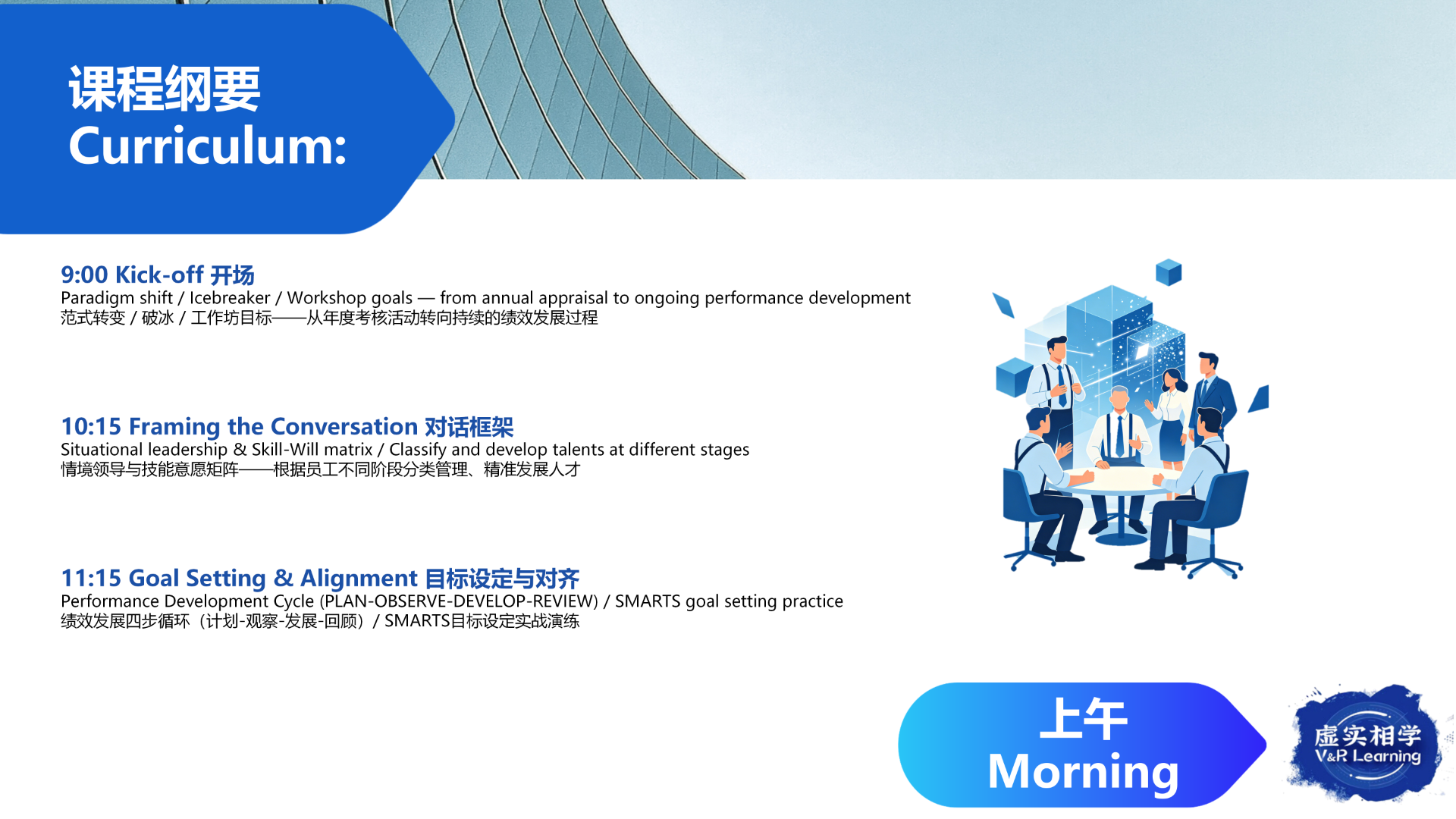
Each participant uses the Skill-Will Matrix to assess every member of their team—identifying who is high-potential, who needs development, and who requires targeted intervention. Based on the classification, managers learn differentiated coaching and management strategies for each talent segment.
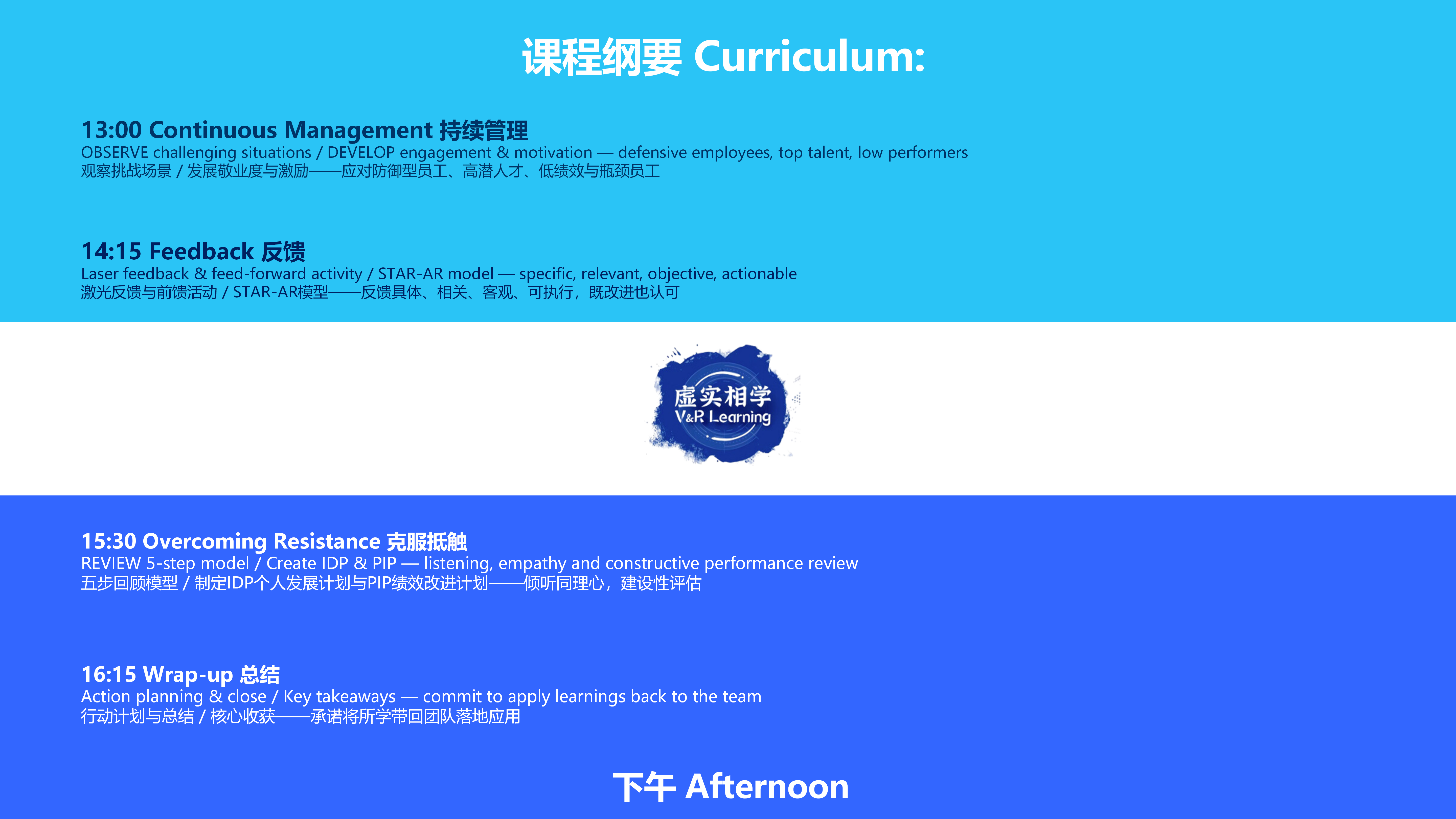
After mastering goal setting, coaching conversations, and feedback techniques, participants move into hands-on practice. Paired up as manager and employee, they simulate real scenarios—GROW coaching conversations, STAR feedback sessions, and IDP/PIP planning—in a safe environment to experiment, receive feedback, and improve.
At the end of the workshop, every participant leaves with a ready-to-use personal action plan—including a goal conversation to hold with a direct report this quarter, a feedback session to deliver, and a development plan for a key team member. Key concepts and tools will continue to deepen through ongoing management practice.
Using the SMARTS framework, managers collaborate with employees to set quarterly/annual goals, ensuring individual objectives align with team goals and organizational strategy.
Throughout goal execution, managers hold regular GROW-based coaching conversations and deliver timely STAR-based feedback, helping employees course-correct and remove blockers in real time.
At the end of the cycle, managers conduct performance reviews, identify strengths and gaps, and create IDPs for high-potential employees and PIPs for those needing improvement—closing the loop.